
Tips for sewing a toile and study pieces

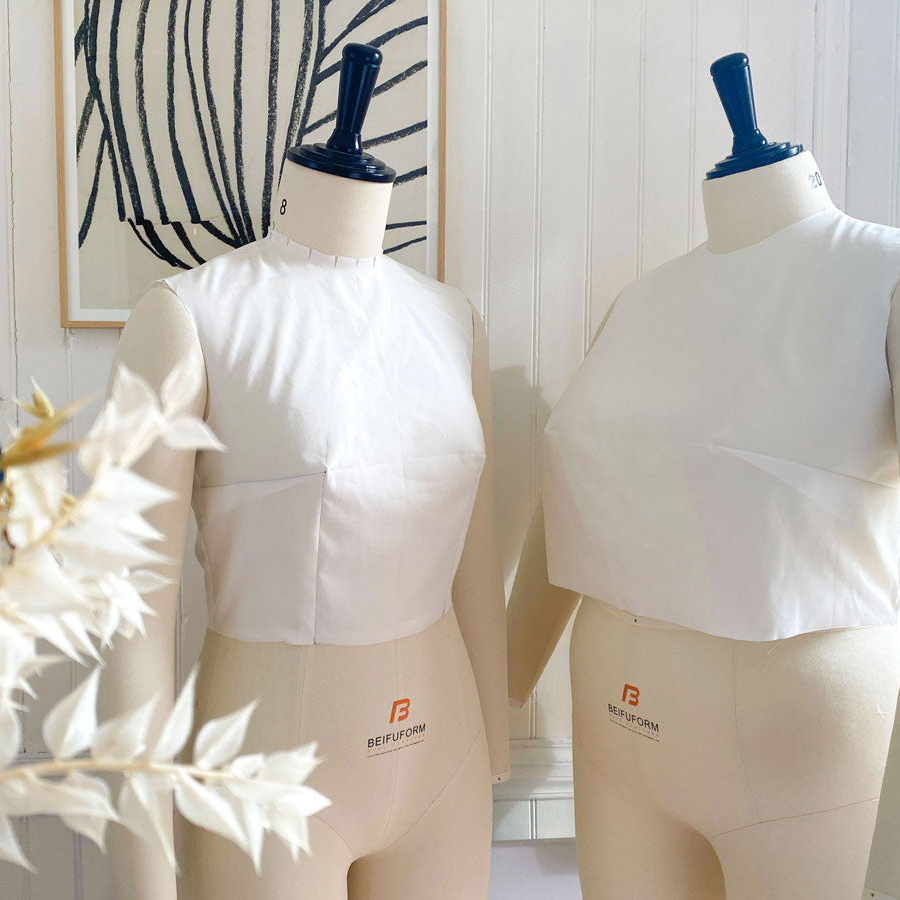
Before cutting into your beautiful fabric, it is often recommended to make a toile of your garment. This step allows you to check your size, make a first fitting and identify any adjustments before sewing the final version.
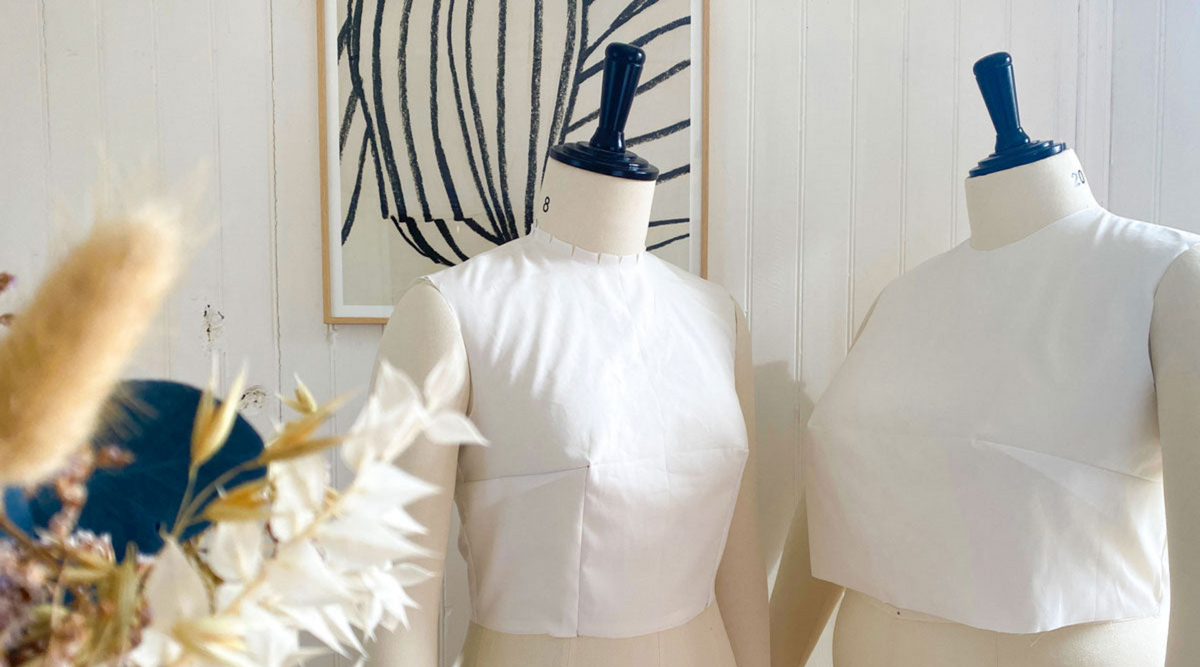
I spend a lot of time making toiles when developing my patterns. They allow me to check and adjust many details: neckline depth, lengths, ease, proportions...
If you are using my mix-and-match sewing patterns for the first time, I highly recommend making a toile before cutting into your final fabric. It is the best way to check your size and identify the adjustments that work for you. Once these adjustments have been validated, a toile will generally no longer be necessary for your future projects.
Making a toile before sewing: why and how?
What is a toile in sewing?
A toile is a test version of a garment, made in an inexpensive fabric before cutting into your final fabric. It allows you to check the garment's drape, ease and proportions, as well as familiarise yourself with the pattern construction.
A toile is essentially a draft: it does not need to be perfectly finished. Its main purpose is to allow you to make a first fitting and identify any adjustments needed to the pattern.
What fabric should you use for a toile?
For my toiles, I use soft cotton calico from Stragier. It has enough structure to make a reliable fitting toile without being too expensive.
Calico, cotton muslin or scraps from previous sewing projects are also suitable. Your toile may then have a very patchwork look! The most important thing is to choose a fabric with a weight and drape similar to your final fabric, with enough structure to prevent it from stretching or distorting, particularly on the bias.

How can you sew a toile quickly?
A toile is not meant to be a finished version of the garment. There is therefore no need to complete all the finishing details. Here are my main tips for sewing a toile quickly.
1. Lengthen your stitch length
Use a longer straight stitch than usual. This will make the toile much easier to unpick when you need to alter certain seams.
2. Reproduce the correct volume
On the other hand, do not simplify elements that affect the volume and comfort of the garment. If the design has sleeves, sew them. If it is a dress, assemble the skirt as well. These elements are essential for accurately assessing the garment's volume, ease and comfort when worn.
3. Simplify the finishing
You can skip finishing details that do not affect the final fit or drape:
- do not cut the facings or lining;
- do not sew the hems;
- do not finish the seam allowances;
- skip decorative details such as ruffles, patch pockets, piping, etc., unless you want to check their volume or aesthetic effect;
- do not finish the neckline or armholes.
For the neckline and armholes (on a sleeveless garment), I simply sew a straight stitch 1 cm from the edge, then clip the curves before pressing the seam allowances towards the inside.
How can you adjust a sewing pattern using a toile?
Once your toile is sewn, try it on with the underwear and, if necessary, the clothes you plan to wear with your final garment (for example, a sweater underneath a jumpsuit). Take the time to move around in the garment: sit down, raise your arms, walk around... The aim is to check that it is comfortable and that the proportions work for you.
Check the ease
Is the garment comfortable enough? Is it too fitted or, on the contrary, too loose?
If necessary, pin the side seams to reduce the amount of ease, or adjust them to add more room. Remember to move around again after each alteration to check the fit.
Check the lengths and proportions
Also check the body height and proportions of the garment: is the length right for you? Does the waist seam sit at your natural waist? Are the darts or princess seams correctly positioned in relation to your bust?
You can also mark the desired hem length directly on the toile.
When altering the side seams, make sure to keep the front and back symmetrical. You can write directly on the toile, pin, sew, unpick or cut: the toile is made to be tested and modified.
What should you do with your toile after fitting?
Don't automatically throw your toiles away. I keep larger pieces, such as skirts, so that I can reuse them to cut new toiles.
Test pieces: testing a technique before getting started
A toile is not the only way to prepare a sewing project. When your garment involves a particular technique, you can make a test piece before working directly on the final garment.
A test piece is a small sample that allows you to test a technique, construction method or combination of fabrics before getting started.
For example:
- Which interfacing is best suited to my fabric?
- What stitch length should I use for topstitching?
- Will the facing provide enough structure for my scallops?
- Do I need to reinforce my fabric on the bias?
- How do I sew a welt pocket?
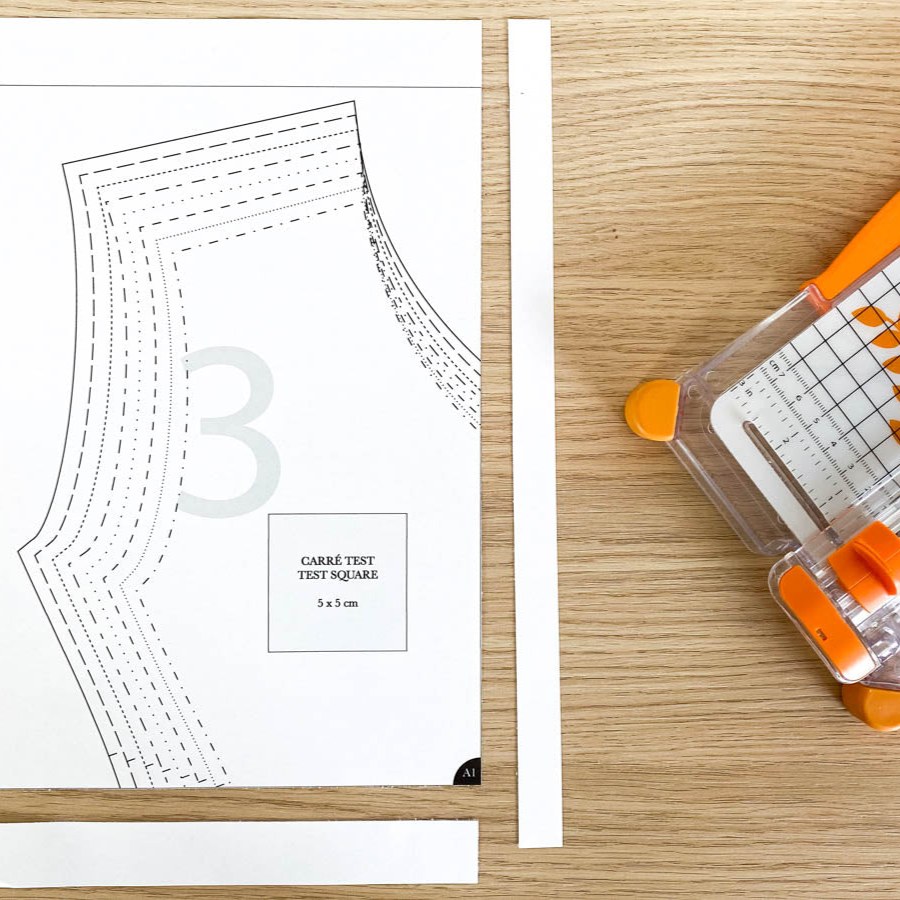
To do this, cut a small piece of fabric, approximately 20 × 20 cm, or adapt the size to the technique you want to test. Then make your sample using the same fabrics and supplies as those planned for the final garment.

For this example, I tested my fabric + lining + interlining combination to check the structure of my scallops.
Make a toile before cutting your final fabric
In conclusion, making a toile allows you to check your size for a sewing pattern, test the fit during a fitting and anticipate any alterations before cutting into your final fabric.
For mix-and-match sewing patterns, I particularly recommend this step the first time you make one of these patterns. It will allow you to check your size, height and any adjustments that may be needed.
Once these adjustments have been validated, you can reuse them for your next projects and go straight to cutting your final fabric.
Happy sewing!