
Comparison of the 3 "circle" skirts and advice for the hem
What is the difference between a quarter-circle skirt, a half-circle skirt and a full-circle skirt? This is a question I am often asked. These three sewing patterns are all based on a circle, but they create different amounts of volume, different drape and require different amounts of fabric.
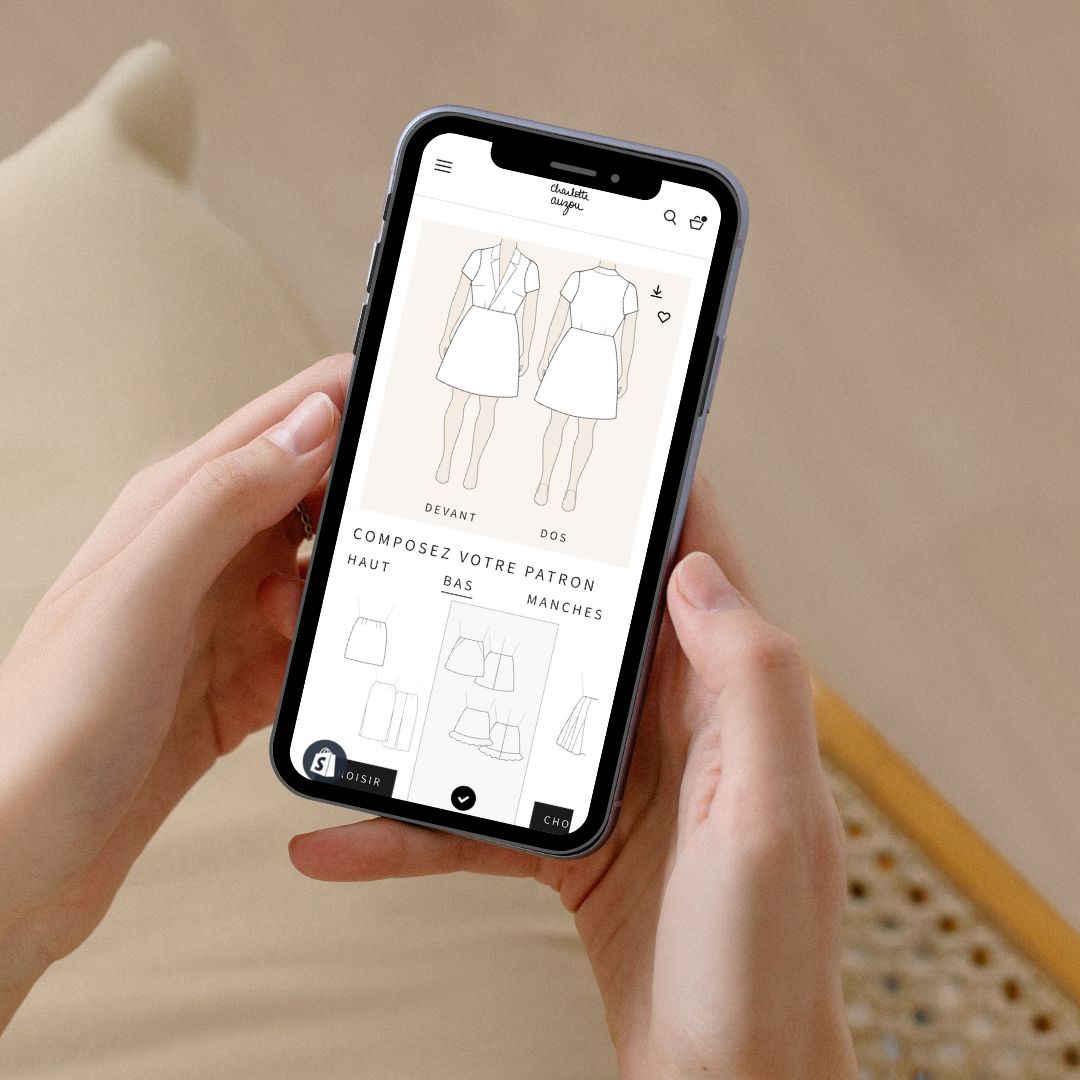
The customizable sewing patterns include these three "circle" skirts, each available in five lengths: the quarter-circle skirt, the half-circle skirt and the full-circle skirt.
Going back a little, these three skirts have been part of the customizable sewing patterns since the very beginning. A few months ago, I updated these patterns to add more options and improve them further.
The difference between the three circle skirts
All three patterns are available in five lengths:
• short, above the knee
• midi, mid-calf
• long, ankle length
• ceremony, floor length with heels
• ceremony, with a 50 cm train at the back
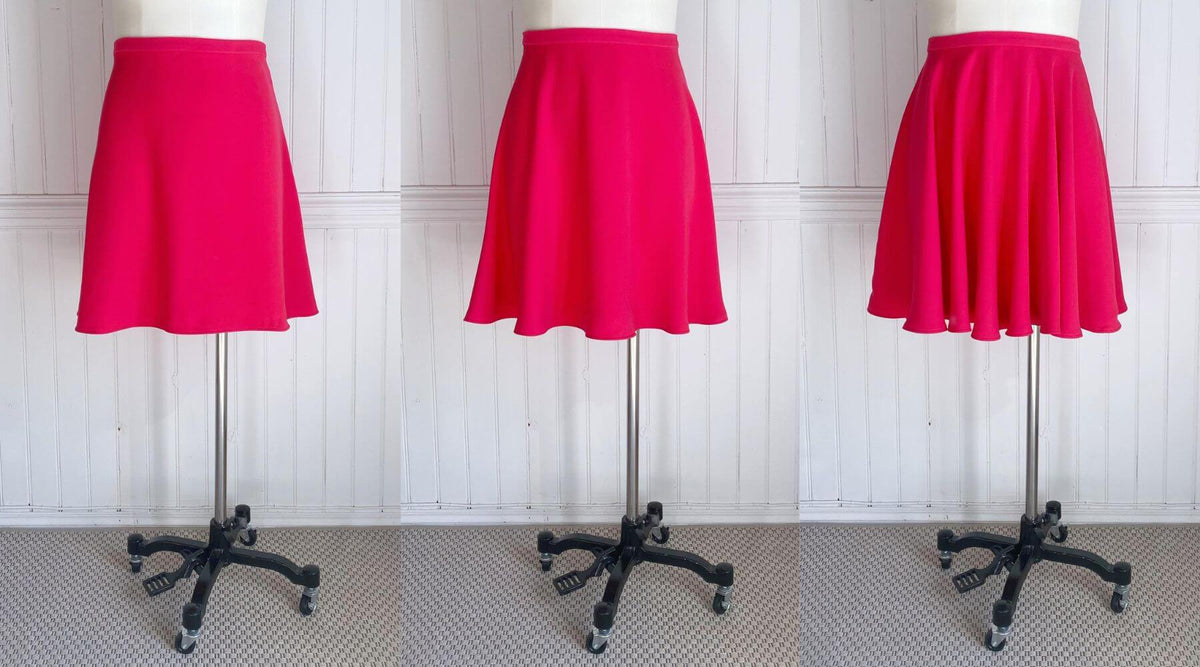
As their names suggest, these skirts are based on a circle and offer different amounts of volume. The full-circle skirt is based on a complete circle. The half-circle skirt has half as much volume, while the quarter-circle skirt reduces the volume by half again.
This means that you will get more or fewer folds at the hem, and the skirt will be more or less fitted around the hips.
If you want a skirt that defines the waist and has plenty of movement, I would recommend the full-circle skirt. The quarter-circle skirt, on the other hand, is more fitted and follows the shape of the body more closely.
The half-circle skirt sits between the two, with an intermediate amount of volume. It gives you a fluid drape without as much fullness as a full-circle skirt.
Here is what the three styles look like in the short length, followed by the ceremony length:


How much fabric do you need for a circle skirt?
Another important difference between these three sewing patterns is the amount of fabric required. This is an important factor if you want to keep the overall cost of your project under control.
The amount of fabric you need depends on the volume of the skirt, its length and the position of the zipper. Here are the fabric requirements for the three patterns, based on fabric that is 140 cm wide.
| QUARTER-CIRCLE SKIRT | HALF-CIRCLE SKIRT | FULL-CIRCLE SKIRT | |
| With a bodice featuring a center-back zipper | SHORT: 75 cm of fabric MIDI: 120 cm of fabric LONG: 160 cm of fabric CEREMONY: 195 cm of fabric CEREMONY WITH TRAIN: 245 cm of fabric * These fabric requirements only apply to plain fabrics or fabrics with a non-directional pattern. | SHORT: 110 cm of fabric MIDI: 170 cm of fabric LONG: 250 cm of fabric CEREMONY: 320 cm of fabric CEREMONY WITH TRAIN: 485 cm of fabric * These fabric requirements only apply to plain fabrics or fabrics with a non-directional pattern. | SHORT: 150 cm of fabric MIDI: 260 cm of fabric LONG: 370 cm of fabric CEREMONY: 450 cm of fabric CEREMONY WITH TRAIN: 630 cm of fabric * These fabric requirements only apply to plain fabrics or fabrics with a non-directional pattern. |
| With a bodice featuring a side zipper | SHORT: 125 cm of fabric MIDI: 170 cm of fabric LONG: 210 cm of fabric CEREMONY: 245 cm of fabric CEREMONY WITH TRAIN: 290 cm of fabric | SHORT: 130 cm of fabric MIDI: 320 cm of fabric LONG: 380 cm of fabric CEREMONY: 420 cm of fabric CEREMONY WITH TRAIN: 485 cm of fabric | SHORT: 290 cm of fabric MIDI: 380 cm of fabric LONG: 460 cm of fabric CEREMONY: 540 cm of fabric CEREMONY WITH TRAIN: 630 cm of fabric |
How to get the perfect hem on a circle skirt
With these patterns, you will need to even out the hem before sewing it. They are generally made in fluid fabrics that will stretch on the bias. Once your dress is sewn, the bottom edge of the dress will no longer be straight. So, how can you fix this?
• The hem should always be the very last step of your project.
• Before evening it out and sewing it, leave your dress hanging on a hanger or dress form for 24 hours. This gives the fabric time to stretch under its own weight.
How should you position your dress to even out the hem?
- on a dress form adjusted to your measurements, which is ideal
- by pinning the waistline straight along the edge of an ironing board. The ironing board must also be level!
In all three cases, the important thing is to make sure that the waistline of the dress is positioned perfectly horizontally.
How should you mark the new hemline?
- with a skirt hem marker
- with a laser level
Here is my favorite method for sewing the hems of my skirts.
Which circle skirt should you choose for your project?
To sum up, the quarter-circle skirt is the most fitted of the three and follows the shape of the body more closely. The half-circle skirt offers an intermediate amount of volume, while the full-circle skirt gives you the most fullness and movement.
All three patterns are available in five lengths and can be customized and combined with the different bodices from the customizable sewing patterns to create a dress that suits your project.
Happy customizing and happy sewing!