
Fabric and Supplies Guide
Many of you ask me which fabrics to choose for sewing garments with my mix-and-match patterns. When you're new to sewing, it can be difficult to navigate the wide range of fabrics, weaves and weights available in fabric shops.
In this guide, I'll share some useful pointers to help you understand different fabrics and choose the right one for your project. This isn't an exhaustive catalogue. With time and practice, you'll learn to recognise different fabrics, understand how they behave and discover which ones you enjoy sewing and wearing. Don't be afraid to experiment!
1. Which fabric should I choose for mix-and-match patterns?
The fabric you choose will affect the drape, volume and comfort of your garment. Before selecting a fabric, there are a few characteristics to consider.
Woven or knit fabric?
There are two main types of fabric: woven and knit. Woven fabrics are made by interlacing two sets of threads, while knit fabrics are made from a single thread knitted into loops. Knit fabrics are generally stretchy.
➤ Mix-and-match patterns are designed exclusively for woven fabrics. They are not suitable for knit fabrics such as jersey.
Fiber content and weave
To choose the right fabric, it is important to distinguish between its fiber content and its weave structure.
- Fiber content refers to the fibers used to make the fabric: natural (cotton, silk, wool), synthetic (polyester, polyamide, acetate) or man-made (viscose, lyocell), which are produced from processed plant cellulose.
- Weave structure refers to the way the threads are interlaced. Voile, chiffon, batiste, twill, crepe, satin and mikado are examples of different fabric constructions, each with its own appearance, feel and drape.
For example, you can find viscose voile or cotton voile, wool twill or polyester twill, silk crepe or viscose crepe.
Weight and drape
Fabric weight is a useful first indicator when choosing your fabric. It is expressed in grams per square metre (g/m²) or per linear metre. Be careful not to confuse the two!
The mix-and-match patterns were originally developed for my bridal and bridesmaid dress collections. They are therefore ideally suited to soft, fluid fabrics. However, other types of fabric can also work well. I'll explain everything below.

Lightweight fabrics (under 130 g/m²)
This category includes the finest fabrics, which are generally soft and supple. Cotton fabrics are easier for beginners to work with than viscose, as they are less slippery and easier to handle.
Your garments will be comfortable and pleasant to wear, without feeling tight in your dress or jumpsuit.
The finest fabrics may need to be lined with a fabric of similar weight to add volume and structure. You can also use lightweight fusible interfacing on bodices to give them more stability.
Examples: voile, batiste, poplin…
Medium-weight fabrics (130–230 g/m²)
Medium-weight fabrics are ideal for more structured garments, as well as dresses and jumpsuits suited to colder seasons. Their drape can vary from soft and fluid to more structured. For example, the cotton chambray shown below has more body than the polyester crepe, despite being lighter. With experience, you'll become more familiar with how different fabrics drape.
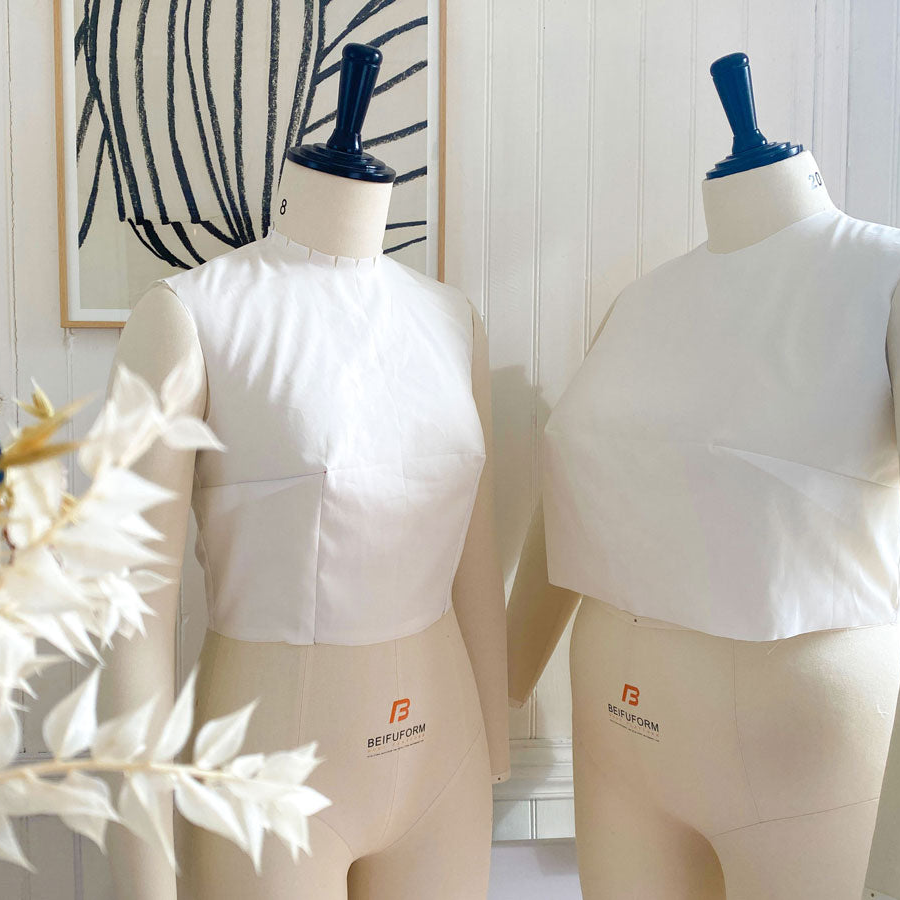
For garments with sleeves or jumpsuits, if the fabric lacks drape, you may need to size up. I recommend making a toile to check your fit.
Examples: twill, velvet, chambray…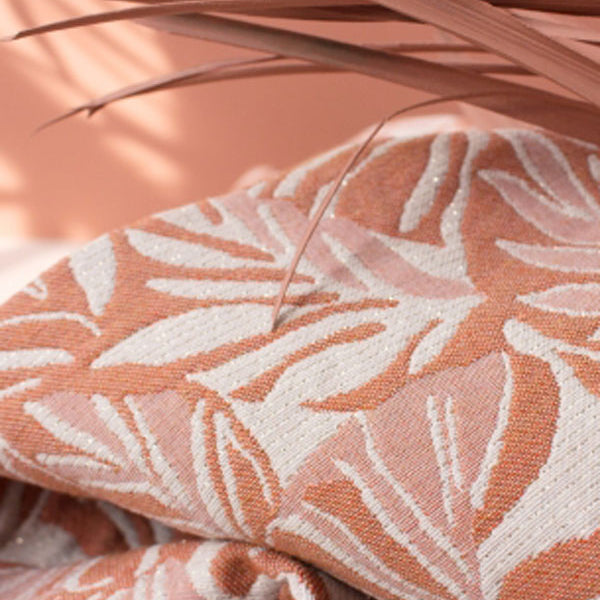
Heavyweight fabrics (over 230 g/m²)
These fabrics generally have less drape and offer less comfort than lighter fabrics. I recommend using them for sleeveless or short-sleeved garments.
They add beautiful volume to flared skirts, such as the half-circle skirt. Avoid gathers and choose a lighter fabric for facings to reduce bulk, which can be difficult to sew and press.
Depending on the level of comfort you want, you may wish to size up or choose a fabric containing elastane.
Examples: jacquard, gabardine, heavy crepe…
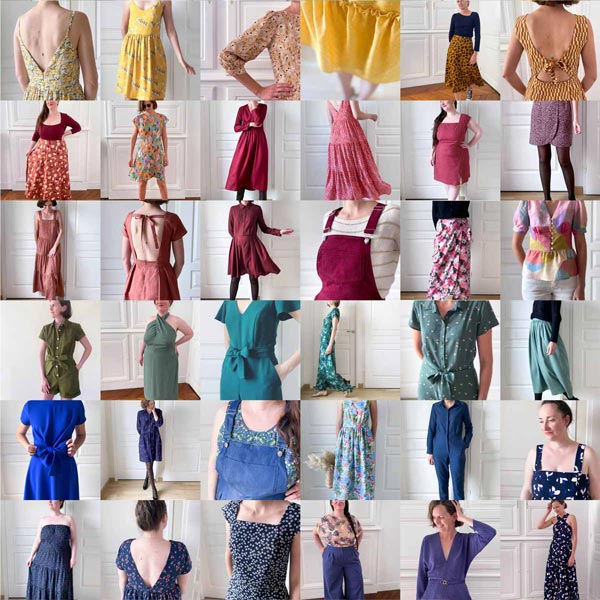
Find inspiration
Not sure what to look for?
Explore garments made with mix-and-match patterns and discover which fabrics were used. You'll find all the fabric references on each project page.
2. Preparing your supplies list
Have you chosen your patterns? You’ll find a list of the supplies needed for your project on each pattern product page, as well as in the instruction booklets.
3. Choosing the right lining
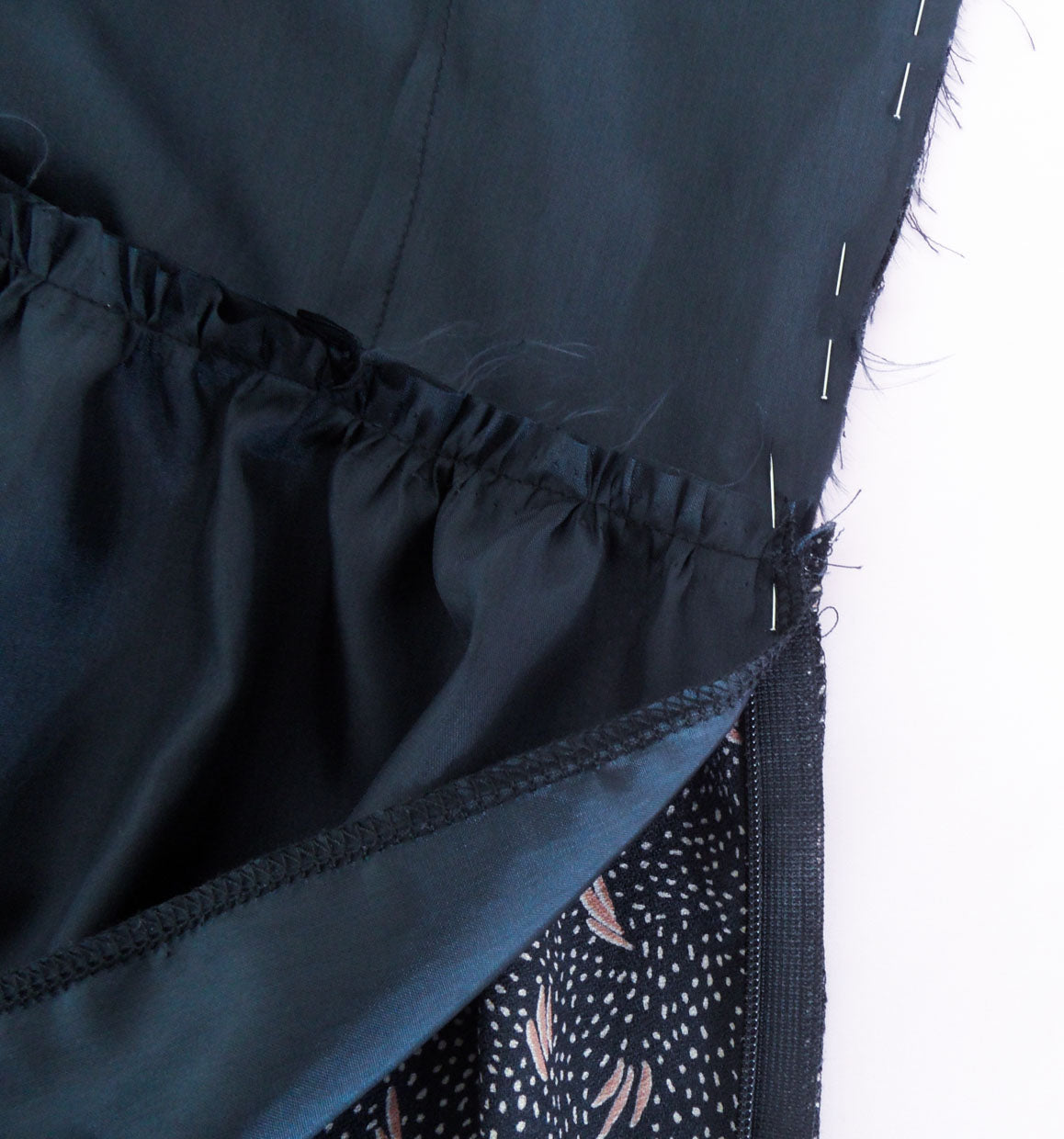
Not all my patterns include a lining: some designs are intended to be worn unlined, while others can be lined using the same fabric as the garment. Adding a lining can improve opacity, comfort or the drape of your garment.
Here are the key points to consider when choosing your lining:
WEIGHT: choose a lining that is lighter than the main fabric.
DRAPE: it should be just as soft and fluid, or more so, than the main fabric.
STRETCH: if your main fabric contains elastane, your lining should also have stretch.
ANTI-STATIC: essential when wearing your garment with tights.
SLIP: the lining should glide easily against the main fabric without catching on it.
I mainly use three types of fabric for lining:
Bemberg: lightweight and anti-static, it's my favourite for dresses worn with tights.
Viscose voile: very soft and comfortable. Wash it before sewing to prevent it from shrinking later.
Cotton voile: I love its natural feel and opacity. It's better suited to summer garments.
4. Which fusible interfacing should I use?
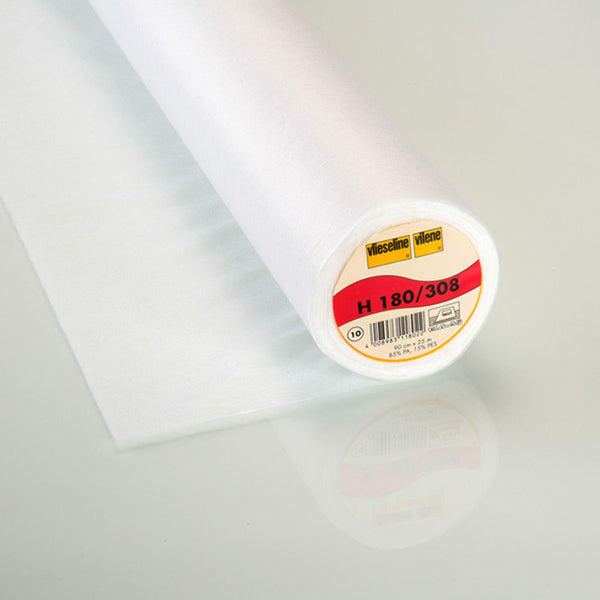
Mix-and-match patterns often include fusible interfacing and fusible stay tape in the supplies list. These materials reinforce your main fabric in areas that need to be stabilised and prevented from stretching or distorting, such as necklines, armholes and pockets.
Here are the interfacings I regularly use:
Vlieseline H180 – Rascol / DS1 Interfacing – Stragier / Fusible stay tape – Rascol
5. My favourite fabric shops






F.A.Q.
Take inspiration from garments already made in the mix-and-match pattern gallery. You'll find references for a wide range of fabrics suitable for my patterns.
No. The pattern drafting and sewing instructions are not designed for these types of fabric.
Some of my bodice patterns are already fully lined, with step-by-step instructions included. For other designs, adding a lining can improve opacity, comfort or provide extra structure to a lightweight fabric.
The instruction booklets show you where to apply fusible interfacing. It reinforces specific areas of your garment, helping to stabilise them and prevent them from stretching or losing their shape over time, particularly around necklines.
To get the complete list of supplies for your project, simply combine the requirements for the Bodice, Bottom and Sleeves. You'll find all the details on each individual pattern product page.

A unique sewing experience
Your are the designer of your next handmade project

100% CUSTOMIZABLE PATTERNS
More than 50,000 mix-and-match designs (dresses, skirts, jumpsuits, etc...)

MADE-TO-MEASURE MULTIPLE SIZES
From 34 to 56 with 2 bust cups and 3 heights

WE ARE HERE TO ASSIST YOU!
Email us at hello@ateliercharlotteauzou.com